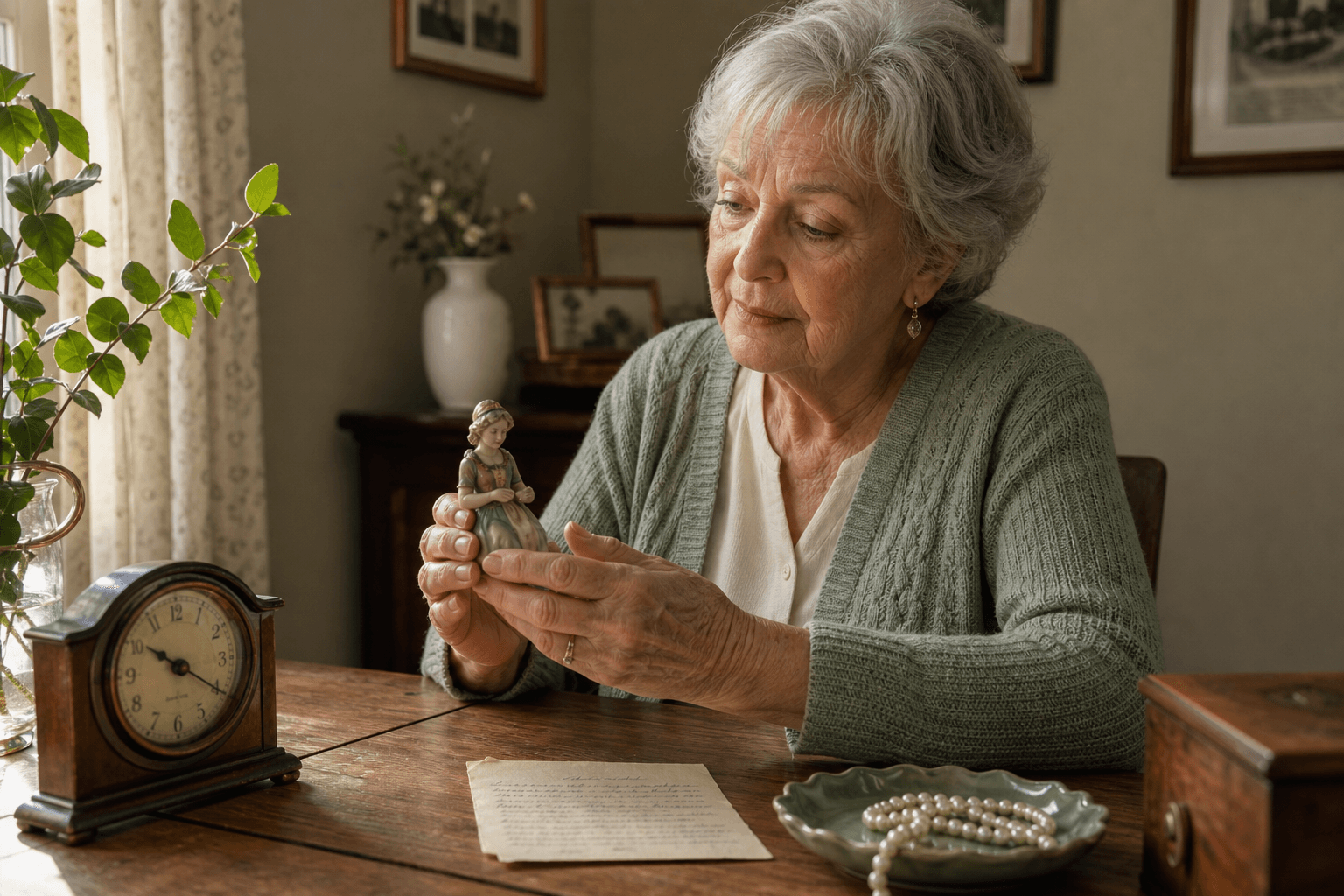
The Stories Behind Your Things: Recording the Meaning of Cherished Belongings
Somewhere in your home, there is almost certainly an object that carries a whole world inside it.
Maybe it's a small clock that sat on your father's bedside table for decades. Maybe it's a ring you wore on your wedding day, or a recipe card in your mother's handwriting — the ink a little faded, a smudge of flour still on the corner. Maybe it's a quilt made from squares of old shirts, each one cut from a different chapter of a life.
These things don't announce their meaning. To a stranger, the clock is just a clock. To you, it's the sound of Sunday mornings and a man you have loved your whole life.
One of the most generous things you can do for the people who will one day inherit your belongings is to write down what they mean — not their monetary value, not where you bought them, but the story that lives inside them.
Why the Story Matters as Much as the Object
When someone you love dies, sorting through their possessions can feel overwhelming and tender at the same time. Your children or grandchildren may hold an object and wonder: did this matter to them? Should I keep it? What am I supposed to feel?
A few sentences from you can transform that uncertainty into something precious. "This was the clock your grandfather wound every Sunday evening before bed. He bought it with his first paycheck." Suddenly, the person holding it knows what they are holding.
You don't need to write about everything — just the things that genuinely carry meaning for you, the ones whose story you'd hate to see forgotten.
A Simple Way to Begin
You don't need a special notebook or a formal system. A plain notepad works beautifully. Go room by room if that helps, or simply start with the things that come to mind first.
For each object, try writing down a few of these details:
Where it came from. Was it a gift, an inheritance, something you found or made? From whom, and when?
What it reminds you of. What moment, person, or feeling does this object bring back? Even a single image — the smell of a kitchen, the sound of a voice — is worth preserving.
Why you kept it. This is often the simplest and most honest thing to write. "I kept this because it reminds me of her." That is enough.
Who you'd like to have it. If there's someone you're thinking of, say so. This isn't a legal document — it's a wish — but it can spare your family from having to guess.
Some Objects to Think About
Here are a few prompts to help you start — not because you must write about all of them, but because sometimes a specific question is easier to answer than a general one.
- The piece of jewelry you wear most often, or the one that came from someone you loved
- A piece of furniture that has moved from home to home with you
- A book with a handwritten inscription, or one you've read so many times the spine is creased
- A photograph, especially one that no one else in the family might know the story behind
- Something homemade — a quilt, a piece of pottery, a woodworking project
- A tool that belonged to a parent or grandparent
- A small object you keep on a shelf or in a drawer, one that others might not notice but that matters to you
You Don't Need to Be a Writer
The goal here is not a polished essay. It is simply your voice, telling the truth about something you love.
Plain words are the best words for this. "My grandmother made this quilt from my grandfather's old shirts after he died. I have kept it on the guest bed my whole adult life." That's a complete story. It's the kind of sentence that someone will read decades from now and feel the warmth of.
You might find that once you start, the words come more easily than you expected. Objects have a way of unlocking memory. One small clock, and suddenly you're writing about Sunday mornings, and a father who was always up before everyone else, and the particular sound the mechanism made.
Keeping It Somewhere It Will Be Found
Once you've written these notes, the most important thing is making sure someone will actually find them.
A digital vault — where you can attach notes to specific items, or write a general section on your belongings — is ideal, because it keeps everything in one place and makes it easy for your family to access when the time comes. Alternatively, a handwritten note kept with the object, or a dedicated section in a folder with your other important documents, can work just as well.
The form matters much less than the fact of doing it at all. A few sentences now, kept somewhere known, will be read with more gratitude than you might imagine.
A Gift That Lasts
There is something quietly generous about recording the stories behind your things. It says: I want you to know what mattered to me. I want these objects to carry meaning forward, not just dust.
Your loved ones won't just inherit things. They'll inherit pieces of your life — if you take a little time to write them down.
If you'd like a quiet, organized place to record these stories alongside your other wishes, Final Wishes was made for exactly this kind of preserving.